Menopause at work: Is your organisation doing enough?
15th October 2026Articles
Learn how to support employees experiencing menopause at work, from practical adjustments and manager training to creating a more supportive workplace culture.
COVID Response
Back to all news & resources >
The Job Support Scheme has been postponed until December, following on from the Furlough Scheme being extended due to a second national lockdown.
The Job Support Scheme is intended to run for 6 months, until 30 April 2021. The government will review the terms of the scheme in January. Employers will be able to claim in arrears from 8 December 2020, with payments made after the claim has been approved. Neither the employer nor the employee needs to have benefitted from the Coronavirus Job Retention Scheme to be eligible for the Job Support Scheme.
Further guidance on the steps that employers need to take to calculate and make a claim to the Job Support Scheme will be published by the end of October.
In the meantime, full details of the current guidelines are available here.
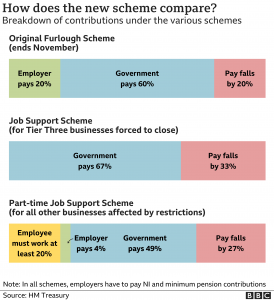
The employee will need to work a minimum of 20% of their usual hours and the employer will continue to pay them as normal for the hours worked. Alongside this, the employee will receive 66.67% of their normal pay for the hours not worked – this will be made up of contributions from the employer and from the government. The employer will pay 5% of reference salary for the hours not worked, up to a maximum of £125 per month, with the discretion to pay more than this if they wish. The government will pay the remainder of 61.67%, of reference salary for the hours not worked, up to a maximum of £1,541.75 per month. This will ensure employees continue to receive at least 73% of their normal wages, where they earn £3,125 a month or less.
Each employee who cannot work due to these restrictions will receive two thirds of their normal pay, paid by their employer and fully funded by the government, to a maximum of £2,083.33 per month, although their employer has discretion to pay more than this if they wish . This will help protect employee incomes, limit unemployment and retain employer-employee matches so that these premises are able to reopen as quickly as possible when circumstances allow.
Employees may also be entitled to additional financial support, including Universal Credit.

If you require any assistance with what you need to inform your employees about the changes taking place, please email us or contact us on 01844 216290.
15th October 2026Articles
Learn how to support employees experiencing menopause at work, from practical adjustments and manager training to creating a more supportive workplace culture.
8th October 2026Articles
The sexual harassment law changes in 2026 strengthen employers’ responsibilities to prevent harassment at work. This guide explains what’s changing and the practical steps employers can take to prepare.
5th October 2026Download Guides
Preventing Burnout Toolkit, a free, practical toolkit helping HR and People Leaders prevent burnout by tackling its causes, with a quick review, team tools and a recovery checklist.
7th September 2026Articles
Learn how HR teams can create a more inclusive workplace, support neurodivergent employees and build better recruitment, management and HR practices.
4th September 2026Articles
Discover how HR leaders can harness the strengths of a multigenerational workforce, from experience and innovation to flexible working, communication and inclusion.
10th August 2026Articles
Charity professionals dedicate their careers to making a difference. Whether supporting vulnerable communities, protecting the […]
Stay informed and up to date with our latest webinars and events. Join us for expert insights, practical advice, and discussions on the topics that matter most.
Want to learn more about our services or discuss your people needs? Use the form below to contact us and we’ll get back to you promptly.